
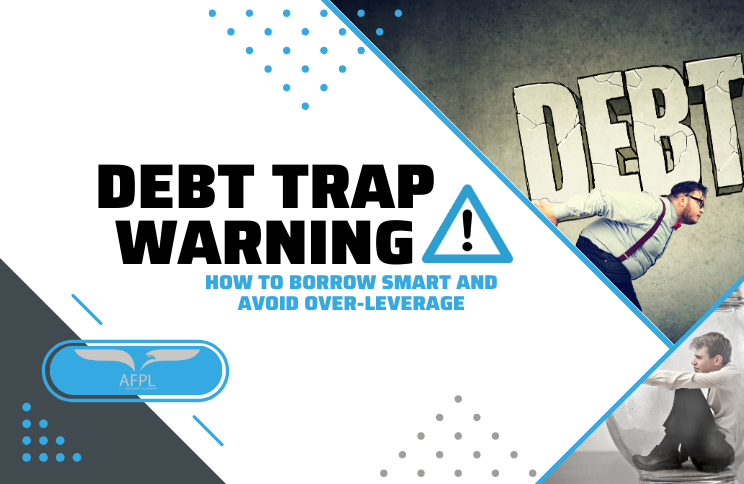
Borrowing money has become easier than ever. With instant approvals, digital lending apps, and aggressive credit offers, loans are just a few clicks away. While credit can be a powerful financial tool, mismanaged borrowing can quickly lead to a debt trap—a situation where repayments become unmanageable and financial stress keeps increasing.
Understanding how to borrow smartly and avoid over-leverage is essential for long-term financial stability.
What Is a Debt Trap?
A debt trap occurs when a borrower:
- Takes multiple loans without assessing repayment capacity
- Uses new loans to repay old ones
- Pays a large portion of income towards EMIs
- Relies on short-term credit for long-term needs
Over time, interest accumulates, cash flow tightens, and financial freedom is lost.
Common Causes of Over-Leverage
- Easy Access to Credit
Instant loan apps and pre-approved offers often encourage borrowing without proper financial evaluation.
- Lifestyle Inflation
Upgrading lifestyle faster than income growth—cars, gadgets, travel—often leads to excessive borrowing.
- Lack of Financial Planning
Borrowing without understanding total EMI obligations, tenure, and interest impact results in poor decisions.
- Emergency Borrowing Without Backup
Absence of an emergency fund forces individuals to rely on high-interest loans during crises.
Warning Signs You Are Entering a Debt Trap
- EMIs exceed 40–50% of monthly income
- Dependence on credit cards or personal loans for routine expenses
- Frequent delays in EMI payments
- Using one loan to close another
- Constant stress around finances
Recognizing these signs early can prevent serious long-term damage.
How to Borrow Smart and Stay Financially Safe
- Assess Repayment Capacity Honestly
Your total EMIs should ideally stay below 35–40% of your monthly income. This leaves room for savings and emergencies.
- Borrow for Assets, Not Liabilities
Loans that create or support assets—homes, vehicles for work, business expansion—are generally healthier than borrowing for consumption.
- Avoid Multiple High-Interest Loans
Personal loans and credit cards carry high interest. Combining multiple such loans can escalate debt quickly.
- Choose the Right Loan Tenure
Longer tenures reduce EMIs but increase total interest paid. Balance affordability with cost.
- Read the Fine Print
Understand:
- Interest type (fixed or floating)
- Prepayment charges
- Penalties on missed EMIs
- Hidden fees
Transparency matters more than speed.
Importance of Credit Discipline
Maintaining credit discipline:
- Protects your CIBIL score
- Improves eligibility for better loan terms
- Reduces financial stress
- Builds long-term financial credibility
One missed EMI can affect your credit profile for years.
Debt Consolidation: A Smart Reset Option
If EMIs are overwhelming, debt consolidation—merging multiple loans into one structured loan—can:
- Reduce interest burden
- Simplify repayment
- Improve cash flow
However, consolidation must be done with a trusted lender and proper planning.
Smart Borrowing Is a Financial Skill
Debt is not the enemy. Irresponsible borrowing is. When used wisely, credit supports growth, stability, and opportunity. When misused, it becomes a long-term burden.
Borrowing smart means:
- Planning before applying
- Choosing the right lender
- Borrowing within limits
- Repaying on time
Borrow Responsibly With Ashwini Finance
At Ashwini Finance, we believe in responsible lending, not over-lending. Our focus is on:
- Transparent loan structures
- Honest assessment of repayment capacity
- Flexible EMI options
- Long-term financial well-being of our customers
Whether you are planning a vehicle purchase, business expansion, or financial restructuring, Ashwini Finance helps you borrow smart—without falling into a debt trap.
Because the right loan should support your future, not burden it.
For More Such Informative Blogs Visit – https://ashwinifinance.com/blogs/
dzmqehjlyfyedwmhshumtdqfpytrrs